
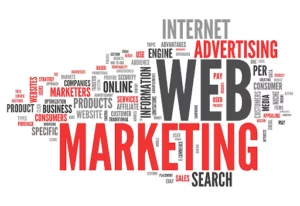
“Web marketing” is now necessary in today’s digital-first era. Whether you’re a small local business, a startup, or an established brand, having a strong web marketing strategy can mean the difference between being discovered (or ignored) online. In this blog, we’ll explore what web marketing is, why it matters, the key components, emerging trends, challenges, and actionable tips to help you build (or refine) your web marketing plan.
What Is Web Marketing?

Web marketing, often known as “online marketing,” “internet marketing,” or “digital marketing,” is the term for a variety of tactics and approaches used to advertise goods, services, or brands online as opposed to relying on traditional channels like print, radio, or outdoor ads, web marketing leverages the web (websites, search engines, social media, email, etc.) to reach, engage, and convert audiences.
At its core, web marketing is about visibility, engagement, and conversion:
Visibility — making sure your brand, content or offerings are seen by your target audience
Engagement — getting that audience to interact (read content, share, comment, click)
Conversion — turning those engaged users into leads or customers
One useful definition:
“Web marketing… is the use of online platforms, strategies, and tools to build brand awareness, engage with customers in a measurable way, and promote and sell goods or services.”Another way to break it down: acquiring well‑targeted web traffic, and then converting that traffic into a desired action (sale, sign-up, download, etc.).
Why Web Marketing Matters (Especially Now)

Here are some compelling reasons why web marketing should be an integral part of any modern business strategy:
-
Scale & Reach
The Internet connects billions of people. Web marketing lets you reach beyond your local geography, cross borders, and target niche audiences with relative ease.
-
Measurability & AnalyticsUnlike many traditional channels, web marketing offers rich data: who saw your ad, when, how many clicked, what they did afterward, etc. This lets you optimize, iterate, and allocate budgets more intelligently.
-
Lower Entry Cost / Flexibility
You can start small (e.g. by running a few ads or content pieces) and scaling as you see results. You don’t necessarily need a huge budget to begin.
-
Personalization & Targeting
Web marketing tools let you segment audiences, personalize messaging, retarget visitors, and deliver relevant content to different user cohorts.
-
Consumer Behavior Shift
More people are researching, comparing, and purchasing online. If your brand isn’t visible on the channels they use, you risk being invisible.
-
Synergy with Other Marketing Channels
Web marketing complements offline efforts. You can drive footfall via online ads, use web
content to support print, and integrate omnichannel strategies.
Given all these advantages, ignoring web marketing is akin to turning off a major engine in your business growth.
Key Components / Strategies in Web Marketing
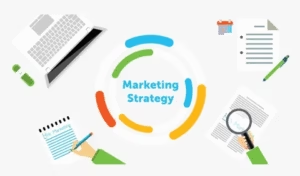
Web marketing is not monolithic. It is composed of multiple strategies and tactics that work together. Below are the major ones:
1. Search Engine Optimization (SEO)
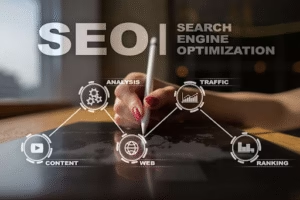
SEO is the practice of optimizing your website and content so that search engines (like Google) rank you higher in organic (non-paid) search results. SEO methods include:
- On‑page SEO — optimizing page titles, meta descriptions, headings, URL structure, content quality, internal linking, etc.
- Technical SEO — site speed, mobile-friendliness, structured data, crawlability, site architecture
- Off‑page SEO / Link Building — acquiring authoritative links from other websites, social signals, guest posting
- Local SEO — optimizing for “near me” queries, mapping, local citations, Google My Business
- Content SEO / Topic clusters — creating content pillars and supporting pages that interlink
SEO is a long-term play: it takes time to show results, but once you rank, you can attract sustainable organic traffic.
2. Pay-Per-Click (PPC) / Search Engine Marketing (SEM)
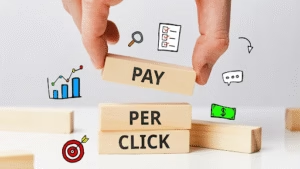
PPC (or paid search) is when you pay for ad placements (mostly on search engines or display networks) and only pay when someone clicks your ad.
This includes:
- Google Ads (Search, Display, Shopping)
- Bing Ads
- Remarketing / Retargeting (ads shown to users who have visited your site before)
- Display ads (banner, video, native)
- Programmatic advertising (automated bidding across networks)
PPC can deliver quick results, especially for competitive keywords or time-sensitive campaigns.
3. Content Marketing

Content marketing is the creation and distribution of valuable, relevant content to attract and engage your target audience.
Formats include:
-
Blog posts, long-form articles
-
E‑books, whitepapers, guides
-
Infographics
-
Videos, webinars, podcasts
-
Case studies, user stories
-
FAQs, knowledge bases
Good content helps with SEO, builds authority/trust, drives social sharing, and nurtures leads through funnels.
4. Email Marketing
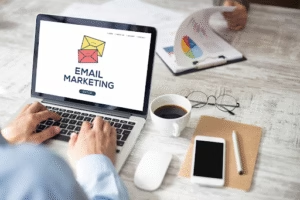
Email marketing involves sending targeted messages and offers to a list of subscribers or customers to nurture engagement, bring them back, or convert tEmail marketing involves sending targeted messages and offers to a list of subscribers or customers to nurture engagement, bring them back, or convert them.
Important aspects:Segmenting your audience
-
Personalization
-
Automation (drip campaigns, triggered mails)
-
A/B testing subject lines, content
-
Monitoring open rates, click-through rates, and deliverability
5. Social Media Marketing
Using social platforms (Facebook, Instagram, LinkedIn, Twitter / X, TikTok, etc.) to build brand awareness, engage users, run ads, and drive traffic.
Components:
-
Organic content (posts, stories, reels)
-
Community management (responding, interacting)
-
Paid social ads
-
Influencer collaborations / partnerships
-
Social commerce (selling directly via social platforms)
6. Affiliate Marketing & Partnerships

Affiliate marketing involves third parties (affiliates) promoting your product or service in return for a commission (based on clicks, leads, or sales).This can scale your reach without large upfront ad costs (you pay only for desired outcomes).
7. Display Advertising & Programmatic
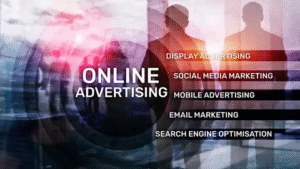
Banner ads, video ads, native ads on websites, managed directly or via programmatic ad exchanges.
Programmatic advertising uses automated systems and algorithms to bid in real time for ad placements, often across multiple networks
8. Analytics & Data / Tracking

Using tools (Google Analytics, Tag Manager, marketing dashboards, etc.) to measure performance, understand user behavior, attribute conversions, and get insights. A web marketing plan without measurement is blind.
Web Marketing Trends & What’s Changing
The web marketing landscape is always evolving. Here are some major trends shaping 2025 and beyond:
1. Artificial Intelligence & Automation
AI is transforming how marketing is done — from content generation and personalization to ad optimization and chatbots
-
Automated audience targeting and bidding
-
AI‑driven content suggestions
-
Conversational AI assistants for lead capture
-
Predictive analytics to forecast customer behavior
2. Answer Engine Optimization (AEO)
As users shift from typing queries to conversational AI / chatbot interfaces, AEO (optimizing for how AI tools answer questions) is emerging as a complement or successor to SEO. Brands are trying to ensure they appear in AI-generated responses.
3. Voice Search & Natural Language Queries
More users are speaking rather than typing, so queries are more conversational and longer (long-tail). Marketers need to shape content that aligns with everyday speech patterns.
4.Short-form Video & Interactive Content
Short videos (Reels, Shorts, TikTok) are dominant content forms for engagement. Live videos, quizzes, polls, interactive stories are being used more to capture attention quickly.
5.Personalization & Hyper-Targeting
Generic mass messaging is less effective. Marketers are segmenting deeply—delivering different messages to different user segments. AI and machine learning help in scaling personalization.
6. Privacy, First-Party Data & Cookieless Future
With increasing privacy regulations (GDPR, CCPA) and browser changes (blocking third-party cookies), marketers must rely more on first-party data, user consent, and privacy‑respecting methods.
7. Omnichannel / Cross-Channel Integration
Consumers jump between devices and channels. Integration across web, mobile, social, offline, email is key to delivering seamless experiencesImmersive Digital Worlds & Next-Gen Web3 Tech
Brands are experimenting with AR filters, virtual try-ons, metaverse presence, NFTs, and Web-based engagement.
Challenges in Web Marketing

While the potential is huge, web marketing comes with its set of challenges:
- Competition & Noise
The web is crowded. Standing out requires differentiation, creativity, and consistency. - Algorithm Changes & Platform Dependence
Search engines and social platforms frequently change their algorithms and rules. What works today might not tomorrow. - Attribution & Multi‑Touch Journeys
Users often interact with multiple touchpoints before converting (ads, email, organic search). Proper attribution is complex. - Privacy & Data Restrictions
With stricter privacy laws and cookie restrictions, tracking and retargeting become harder. - Content & Resource Demands
Creating consistent, high-quality content and maintaining multiple channels requires effort, time, and skills. - Realistic Expectations & Patience
Some strategies (like SEO) take time. Impatience or expecting instant results can lead to abandoning good efforts prematurely. - Over‑reliance on One Channel
Relying heavily on a single channel (e.g. Facebook ads) is risky—if that channel’s policy or algorithm changes, you’re vulnerable.
How to Build a Web Marketing Plan: Step-by-Step
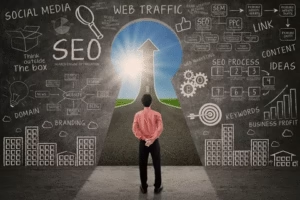
Here’s a practical framework to build or refine your web marketing strategy:
1. Define Clear Goals & KPIs
What do you want to achieve? (Brand awareness, leads, sales, retention, etc.)
Set clear, quantifiable milestones and identify key measurement indicators.
2.Know Your Audience / Personas
Research demographics, psychographics, behavior, pain points, content consumption habits.
3. Audit Current Presence
Analyze your website, SEO performance, social media, content, ad campaigns. Find strengths, weaknesses, gaps.
4. Choose & Prioritize Channels
Select which web marketing channels to focus on based on your audience, budget, and goals (SEO, social, email, PPC, content, etc.)
5. Content Strategy & Calendar
Develop content themes and formats that match your audience’s needs across every stage of the buyer journey.
6. Create / Optimize Assets & Landing Pages
Design or improve landing pages, CTAs, lead magnets, forms, and user flows for conversion optimization.
7. Launch Campaigns & Promotions
Run ads, publish content, send emails, promote on social, engage with audiences.
8. Track, Measure & Analyze
Use analytics tools to monitor performance. Look at traffic, engagement, conversions, costs, ROI.
9. Test, Iterate & Optimize
A/B test headlines, CTAs, ad creatives. Adjust budgets toward top performers. Drop underperforming tactics.
10. Scale & Expand
Once something works, scale it—expand budgets, replicate in other channels or geographies.
Tips & Best Practices for Success
-
Focus on Quality over Quantity
It’s better to do a few things well (e.g. two channels) than many poorly. -
Consistency & Frequency Matter
Regular publishing and engagement build momentum and trust. -
Use Storytelling & Emotional Connection
Technical features are important, but stories resonate, build loyalty, and differentiate brands. -
Mobile-First Is Non-Negotiable
Many users are mobile-only. Ensure fast, responsive mobile experience. -
Optimize for Speed & UX
Slow loading pages or poor user experience drive users away. -
Use Lead Magnets & Gated Content
Offer something valuable (e-book, checklist, free trial) in exchange for user information. -
Retargeting / Remarketing Works
Many users don’t convert on first visit. Bring them back with relevant messaging. -
Segment & Personalize
Avoid “spray and pray” mass messaging. Segment by behavior, demography, lifecycle. -
Monitor Competitors
Keep an eye on what your competitors are doing online—what content is working, which offers, which channels. -
Stay Up-to-Date
The web marketing space evolves fast.Stay open to trying emerging tools, channels, and marketing approaches. -
Don’t Ignore Email & Owned Channels
Social platforms can change policies or algorithms. Your email list, website, and content you control are your core assets. -
Mind Privacy & Trust
Be transparent with privacy policies, cookie consent, and data use. Build trust.
Web Marketing in the Indian / Kerala Context (Optional / Considerations)
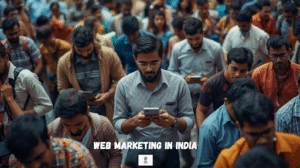
If you are operating in India or specifically Kerala / Kerala towns like Malappuram, here are a few region-specific thoughts:
- Internet penetration and smartphone usage are growing rapidly in India, making web marketing increasingly relevant for local businesses.
- maximizing local-intent keywords, refining map visibility, building citation authority, and upgrading Google listings.
- Use regional content / language (Malayalam, Tamil, English) to resonate better with local audiences.
- Micro-targeted ads (e.g. in city / district) may yield better ROI than national-level broad campaigns.
- Embrace vernacular video / short-form content to appeal to local tastes.
- Collaborate with local influencers or micro-influencers, who often have loyal local followings.
- Payment integrations and trust (especially e-commerce) matter: ensure seamless, trusted payment gateways for the Indian audience.
Case Study / Example (Hypothetical)

Let’s imagine a small e-commerce business in Kerala selling handcrafted pottery.
- Goal
Increase online sales by 30% in 6 months. - Audience
Urban dwellers in Kerala / India, interested in home décor, sustainable / artisanal products. -
Strategy
- SEO: Optimize for keywords like “handmade pottery Kerala,” “ceramic vases online India”
- Content: Blog posts (e.g. “How to care for ceramic pots,” “Interior décor ideas with pottery”)
- Social Media: BTS production posts, engaging reels, and customer photo highlights across Instagram and Facebook.
- PPC: Google Shopping ads + remarketing
- Email: Capture emails via lead magnet (e.g. “Guide to choosing ceramics”) and send newsletters, cart abandonment campaigns
- Retargeting: Ads to people who visited product pages but didn’t purchase
- CRO: Optimize product pages, reviews, trust badges, simplified checkout
-
Measurement & Optimization
- Track source of traffic and conversions
- A/B test ad creatives
- If Instagram is performing high, shift more budget there
- Drop underperforming keywords or a
Conclusion
Web marketing offers an unparalleled toolkit for brands to reach, engage, and convert online audiences. But it’s not magic—success comes from a thoughtful strategy, consistent execution, measurement, and iteration.
If I were summarizing the essence:
Focus on your audience, choose the right channels, measure everything, and be ready to adapt. And always remember: traffic is just half the battle — converting that traffic is what really drives growth.
Author: Savad
Freelance Digital Marker In Chemmad
Hi, this is a comment.
To get started with moderating, editing, and deleting comments, please visit the Comments screen in the dashboard.
Commenter avatars come from Gravatar.